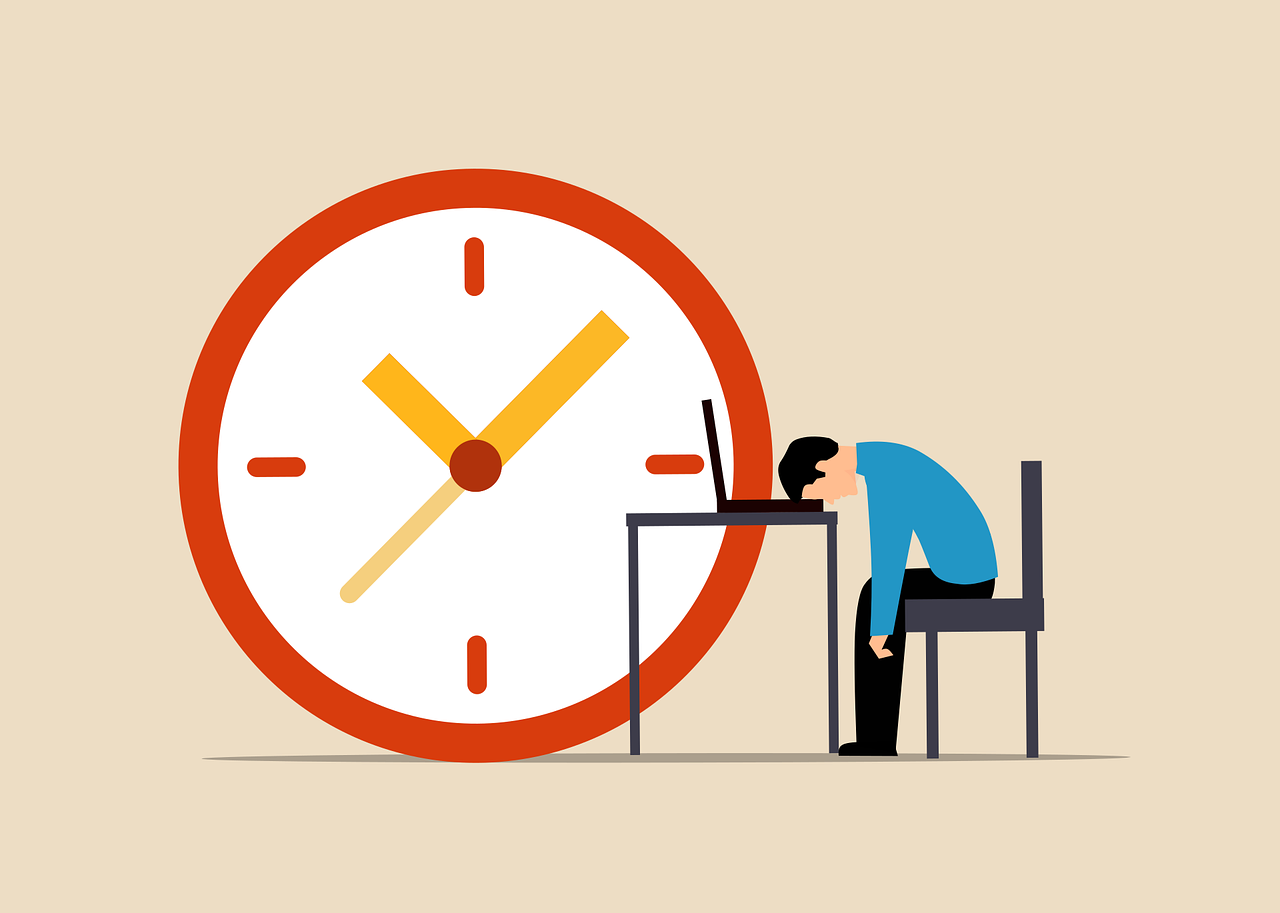
When Decision Fatigue Looks Like Procrastination (And What to Do About It)
How many times have you beat yourself up for procrastinating when something else entirely was going on? You sit down ready to handle one simple task, and somehow you end up frozen, scrolling, or cleaning something that hasn't mattered to you in years. Then the guilt shows up, loud and convincing.
Picture this. You finally have time to update your website. You're motivated. It's been on your list for weeks. You open your laptop, and your brain goes quiet. You stare at the screen, bounce to another tab, and suddenly reorganizing your sock drawer feels urgent. Two hours later, you've done everything except the website, and you're calling yourself lazy.
Spoiler alert, you weren't being lazy.
This is what it can look like when decision fatigue pretends to be procrastination, especially if you're neurodivergent.
Why “one task” turns into an avalanche of choices
“Update website” sounds like one item on a to-do list. Your brain doesn't experience it that way.
On paper, it's a single task. In real life, it's a pile of tiny choices, each one asking your brain to evaluate, compare, judge, and pick a direction. If you already started the day with a lower amount of executive function energy, that pile can be enough to make your system stall.
Here's the difference. Procrastination often means you're avoiding discomfort. Decision fatigue means your brain is out of processing power, so it hits the brakes.
Your brain hit a wall of decisions that it couldn't process and it shut down.
To make this real, look at what “update your website” can include:
- Which page do you start with?
- What actually needs updating?
- Do you rewrite the section or just tweak it?
- Do you need new photos, and which ones?
- Do you update your bio, and what do you say now?
- How should you structure your services page?
- What's your messaging now, and has your brand voice changed?
- Do you update the contact form or add a new testimonial?
That's not even everything. It just keeps branching.
Your to-do list sees one thing. Your brain sees all the things.
Once your brain registers “too many decisions,” it does something protective. It tries to get you away from the pressure. From the outside, that looks like avoidance. From the inside, it can feel like a blank mind and a heavy body.
Decision fatigue vs. procrastination: how to tell what's really going on
Decision fatigue and procrastination can look identical at first. Either way, the task isn't getting done. Either way, you might feel guilty. The key is paying attention to what's happening right before you drift away from the task.
Signs you're in decision fatigue (the paralysis flavor)
Decision fatigue tends to feel like you're stuck in place, not like you're choosing fun over work. A few common tells:
- You genuinely can't figure out where to start.
- Every option feels equally overwhelming.
- Your mind goes blank when you think about the task.
- You keep asking, “What should I do?” on repeat.
Instead of a clear next step, you get static.
Classic procrastination clues (the avoidance flavor)
With procrastination, you usually know what to do. You just don't want to do it. You might feel resistance, dread, boredom, or fear of doing it wrong. Yet the path is still visible.
To make it easier to spot, here's a quick side-by-side comparison.
| What it feels like | Decision fatigue | Procrastination |
|---|---|---|
| Starting point | You can't find one | You know the first step |
| Inner experience | Blank, foggy, overwhelmed | Resistant, avoiding discomfort |
| Choice | It doesn't feel like a choice | You're choosing other activities |
| Deadlines | Pressure often doesn't help | Deadline pressure often helps |
The point is not to label yourself. The point is to pick the right fix. When the real issue is overwhelm, pushing harder often makes it worse.
If you want more context on how decision fatigue shows up for ADHD leaders, this perspective can be a helpful companion: decision fatigue causes and solutions for ADHD leaders.

The shame spiral that makes everything harder
Here's where things get painful. When you don't realize you're in decision fatigue, you explain the stuckness as a character flaw.

The task doesn't get done, so you decide you're procrastinating. Then the self-talk kicks in: “Why can't I just do this? Everyone else can update their website. What's wrong with me?”
That story brings shame. Shame triggers stress. Stress drains your cognitive resources even further. Now you have even less capacity to decide, plan, or start. As a result, you avoid more, feel worse, and keep looping.
This cycle is exhausting because it punishes you for something that is often a capacity issue, not a motivation issue.
Stress depletes your cognitive resources even further.
So the goal is not “try harder.” The goal is to reduce the number of decisions your brain has to chew through, and to stop pouring shame on top of a tired nervous system.
Your secret weapon: pre-decisions that save future you
One of the most practical ways to reduce decision fatigue is simple: make decisions ahead of time, when you have the energy, and then lock them in.
These are pre-decisions. You decide once, and you stop re-deciding.
That can look like:
- Templates for recurring tasks (so you don't reinvent the wheel).
- Standard operating procedures for repeat work (especially for marketing and admin).
- Default choices, like “client work happens in the morning,” or “this is my color palette for social posts.”
- If-then rules, like “If it's Monday, then I work on content creation.”
When you remove the need to decide, you remove the drain.
Pre-decisions don't make you rigid. They make you consistent when your energy dips. They also protect your best thinking for the work that actually needs it, like creative problem-solving, leadership, and making money.

Smart ways to slash decision points during the workday
You don't have to eliminate every decision. You just want fewer decision bottlenecks. The easiest place to start is with the moments where you tend to stall out, like content, websites, offers, inboxes, and scheduling.
Limit options and use rotations
More choices create more mental load. Having more than three choices can ramp up decision fatigue fast. So instead of keeping everything open-ended, set a rotation.
A content calendar is the obvious example: certain post types go on certain days. The bigger win is applying that same idea to the rest of your work. Give yourself a short menu of “today's options” instead of a giant list of “anything is possible.”
When you reduce the field, you reduce the mental wrestling match.
Build “choice menus” for low-energy days
Decision fatigue often hits when you're already tired, hungry, overstimulated, or coming off a demanding stretch of work. Those are not the moments to ask yourself to design the perfect plan.
A low-energy day menu is a pre-made list of tasks that are safe to do when your brain is not at full strength. The key is that the menu is short, clear, and already approved by you.
Instead of asking “What should I do?” you ask “Which of these three things is doable right now?”
Define a good enough standard
Perfection creates extra decisions. You reread, retweak, re-check, and second-guess. Meanwhile, your brain burns energy on tiny optimizations that do not move the needle.
Setting a good enough standard helps because you stop trying to “find the best version” when “finished” is the real goal. You can even decide what good enough looks like on your hardest days, so you don't have to negotiate with yourself in the moment.
Use decision trees to run on autopilot
A decision tree is basically “If A, then B. If C, then D.” It turns thinking into a simple path.
Here's a plain example you can adapt:
- If you feel foggy and stuck, then pick one task from your low-energy menu.
- If you feel clear and steady, then follow your rotation (content day, admin day, client day).
- If a task has more than three open decisions, then you break it into smaller choices before you start.
This works because you stop asking your brain to invent a plan under pressure.

Did you know I have a membership for women who want to improve their executive function skills? Check it out here.
Your body often notices decision fatigue first
Your conscious mind can be late to the party. Your body, however, tends to signal overload early.
Watch for cues like these:
- Mental fog, like your brain is made of cotton
- Physical tension or heaviness, especially in your shoulders or head
- Increased irritability, where everything feels annoying
- A craving for simple, familiar activities (hello, pantry reorganization)
- Trouble focusing on the task itself
- Shallow breathing
Catching these signs early matters because you can step in before you hit full shutdown. Waiting until you're completely paralyzed usually means the reset takes longer.
Quick resets that restore decision-making capacity
Once you're in decision fatigue, your job is to rebuild capacity. That does not mean forcing the task. It means giving your system what it needs so decisions become possible again.
Do these five reset moves
- Take a 10-minute walk with no input (no phone, no podcast).
- Do physical movement that doesn't require planning, like putting on music and dancing.
- Complete one mindless task, so you feel productive without heavy thinking.
- Get protein and water, because your brain needs fuel.
- Take a brief nap, or just lie down for a few minutes.
These are simple on purpose. It makes it easy to do a reset so you can continue to function.