Fight, Flight, Freeze, Fawn: Which Survival Response Is Costing You Money?
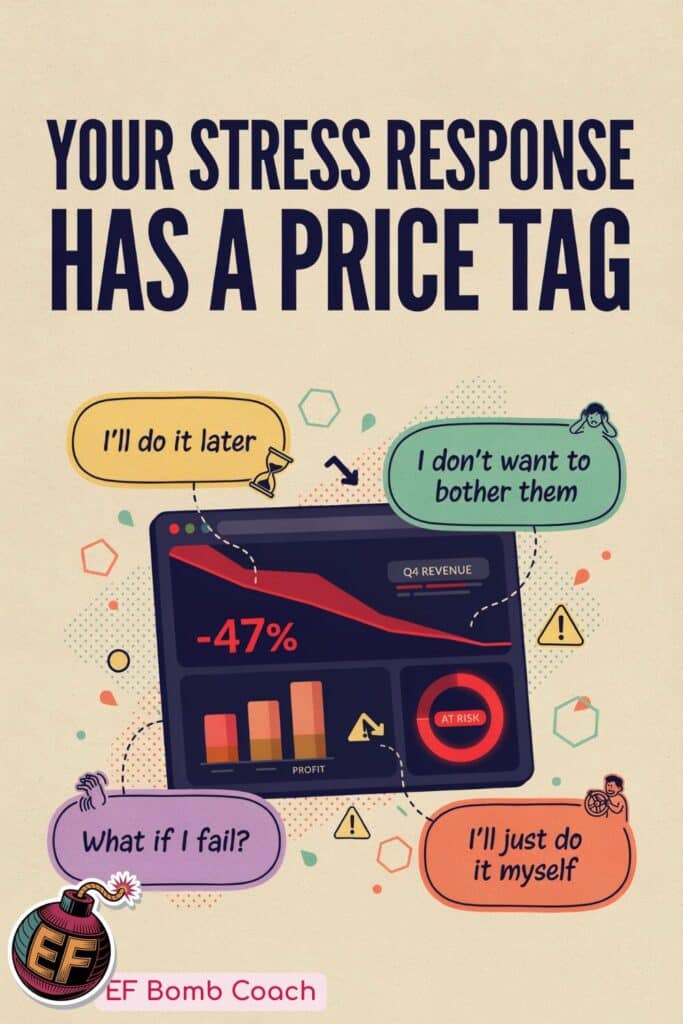
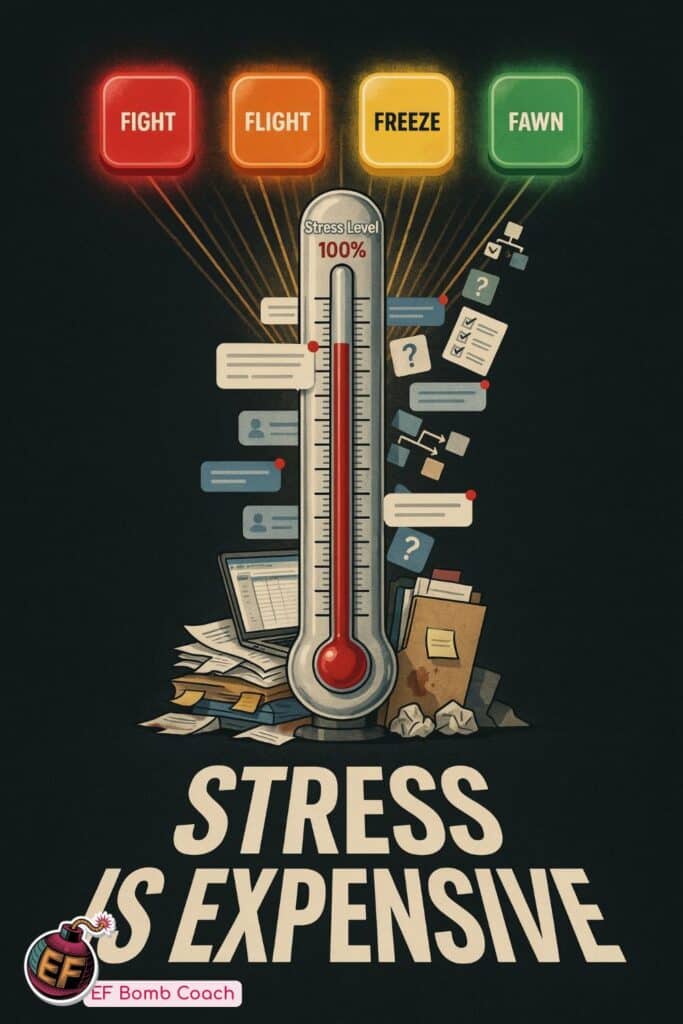
You don't always make the worst business decisions because you don't know what you're doing. Sometimes you make them because your nervous system hit the alarm before your thinking brain had a chance to weigh in and you resort to your survival response: fight, flight, freeze, or fawn.
If you've ever lowered your rate before anyone asked, said yes to a project you already dreaded, or delayed launching something for months, that isn't random. A lot of what looks like strategy in business is stress trying to keep you safe. Once you can see that, you can stop letting survival mode run the show.
When stress starts making your business decisions
Stress in business doesn't always look dramatic. Sometimes it looks polished. Responsible, even. It can show up as:
- undercharging a client before they push back
- saying yes to work that drains you
- putting off a launch for six months because it still doesn't feel “ready”
- writing a three-paragraph email to explain one simple boundary
That doesn't mean you're bad at business. It means your brain is doing what brains do when they sense danger, it's trying to protect you.
The problem is that your nervous system doesn't only react to physical danger. It reacts to social and emotional threats too. Rejection. Failure. Criticism. Visibility. The fear that people will think you're a fraud. When that threat response kicks in, the part of your brain that handles planning, prioritizing, and decision-making gets a whole lot harder to access. That's your prefrontal cortex, the part you want online when you're pricing offers, replying to clients, and deciding what to do next.
If you have ADHD, this can hit even harder because executive function is already a tender spot. Stress doesn't have to knock much to push things offline. If you want more context for why that happens, this overview of the ADHD nervous system gives a helpful plain-English explanation.
Survival mode can wear a business hat, but it's still survival mode.
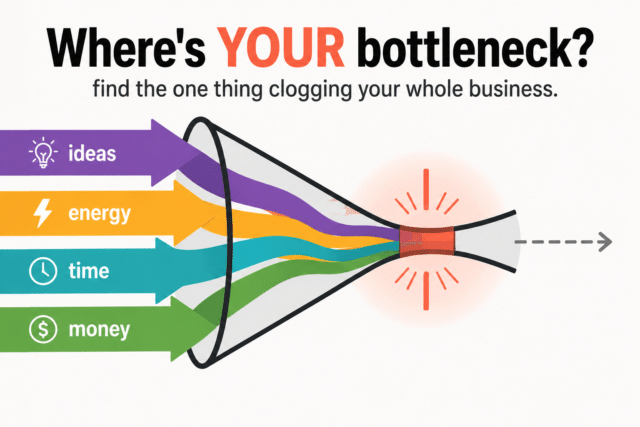
That's the piece a lot of people miss. The point isn't that you made a bad decision. The point is that you weren't fully in the driver's seat when you made it. A big chunk of the ADHD business tax isn't a lack of skill. It's the money, energy, and time you lose while your body is trying to keep you from discomfort.
How to spot your default survival response
Most people have a default stress response. A lot of ADHD women cycle through all four depending on the week, the task, the client, or the kind of risk involved. None of these responses are flaws. They're protection patterns.
Here's what they often look like in business:
| Response | What it can look like in business | What your system is trying to avoid |
|---|---|---|
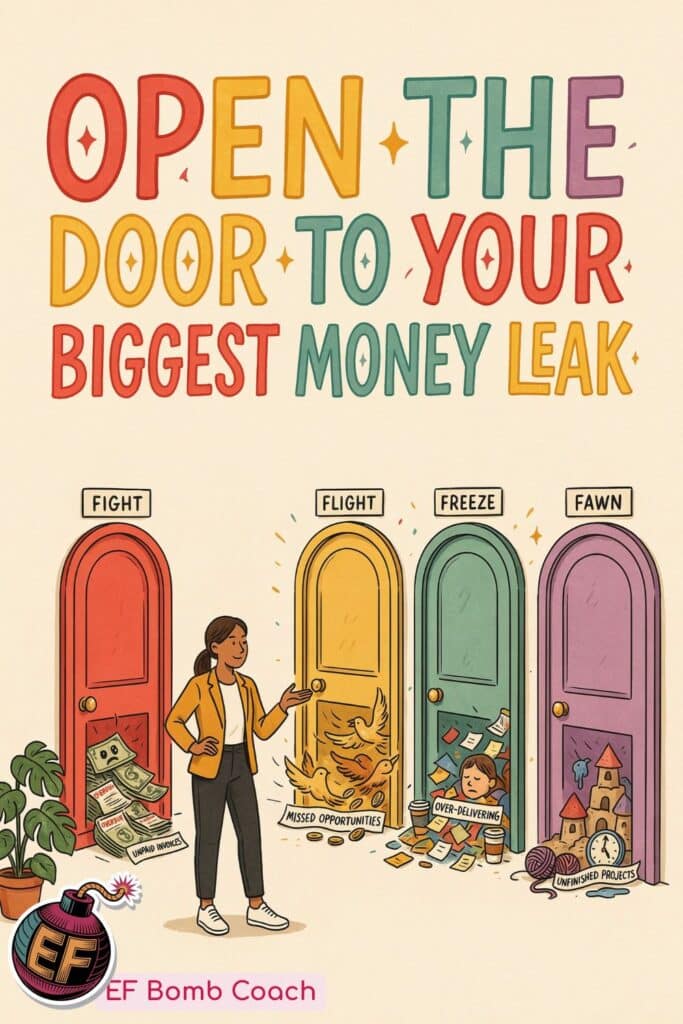
| Fight | Overcommitting, making sharp price changes, getting defensive after feedback | Feeling powerless, exposed, or wrong |
| Flight | Avoiding launches, ghosting your inbox, starting new ideas before finishing old ones | The risk of being seen, judged, or rejected once the work is done |
| Freeze | Staring at the task, waiting for the “right time,” organizing without shipping | Failure, visibility, or making the wrong move |
| Fawn | Undercharging, overexplaining, saying yes when you mean no, shrinking your offer | Conflict, disapproval, or losing the client |
That table matters because stress isn't one-size-fits-all. Your response might be high-energy. It might be shutdown. It might look productive. It might look kind. But the common thread is the same: your body is trying to reduce threat fast.
Maybe your version is fight. You start doing more, pushing harder, defending every choice, and trying to outwork the fear.
Maybe it's flight. You suddenly get a “better” idea and pour yourself into that instead of finishing the scary thing sitting right in front of you.
Maybe it's freeze. You know what you want to do, but you can't get your body to move. You wait, and wait, and wait for confidence to show up first.
Or maybe it's fawn. You become the easiest person in the room to work with, until you realize you've made yourself impossible to protect.
If more than one of these sounds like you, that doesn't mean you're inconsistent. It means your nervous system has more than one exit route.

Why fawn and freeze drain your business in sneaky ways
Fawn is sneaky because it can look like generosity. It can look like being thoughtful, flexible, easygoing, and client-centered. On the surface, it doesn't look like a problem.
But generosity and fear are not the same thing.
If you're fawning, you might quote a lower price before the client even reacts. You might toss in extra deliverables because you're scared they'll leave. You might rewrite a “no” email five times until it barely says no at all. You might offer a discount because they went silent for a day and now your nervous system has decided silence means rejection.
That's not a pricing strategy. That's a protection strategy.
And yes, the money loss matters. But the resentment matters too. You say yes when you mean no, then you have to do the work anyway. You made the situation “easier” for someone else, but harder for yourself. That cost stacks up fast.
Freeze is different, but it hurts in its own way. If freeze is your default, you probably have plans. Maybe good ones. Maybe color-coded ones. Maybe a whole collection of half-built offers, outlines, launch ideas, and systems that never made it out into the world.
Then comes the worst part, you look around at other people doing the thing and start wondering what's wrong with you.
Nothing is wrong with you.
Your system looked at the risk of visibility, rejection, mistakes, or getting it wrong in public, and decided stopping was safer. For a lot of ADHD women, that shutdown can feel a lot like what Understood describes as ADHD analysis paralysis. You're not lazy. You're not unserious. Your brain is trying to avoid a threat.
That's why a better planner doesn't fix freeze by itself. The issue isn't that you forgot how to organize. The issue is that your body doesn't feel safe enough to move.
Why fight and flight can fool you into thinking you're making progress
Fight and flight are the high-energy stress responses, which makes them extra tricky. They can look like momentum.
Fight can look like hustle. You're doing a lot. You're replying fast. You're tightening your grip. You're making bold decisions and pushing hard because doing more feels better than feeling vulnerable.
Flight can look like creativity. You disappear into a new offer, a new idea, a new funnel, a new plan, a new brand tweak, a new anything, because if the old thing never gets finished, it never has to face feedback.
That's why high-energy stress is so easy to miss. It doesn't always look like avoidance. Sometimes it looks like ambition.
But there's a difference between a pivot based on market feedback and a pivot based on panic. One has direction. The other has urgency.
Growth has direction. Stress has urgency.
Let that sink in.
You don't want to rebuild your business from scratch every time a launch doesn't go the way you hoped. You don't want to blow up an offer because one client hesitated. You don't want to scrap a plan because being seen in the middle of it got uncomfortable.
Before you pivot, ask what changed in the data. Then ask what feeling showed up right before you wanted out.
If the answer is, “Nothing changed except I got scared,” that tells you a lot.
This is where many business owners burn cash and energy without realizing it. They keep restarting instead of refining. They keep moving instead of learning. They keep running from the hard part instead of staying with it long enough to understand what happened.
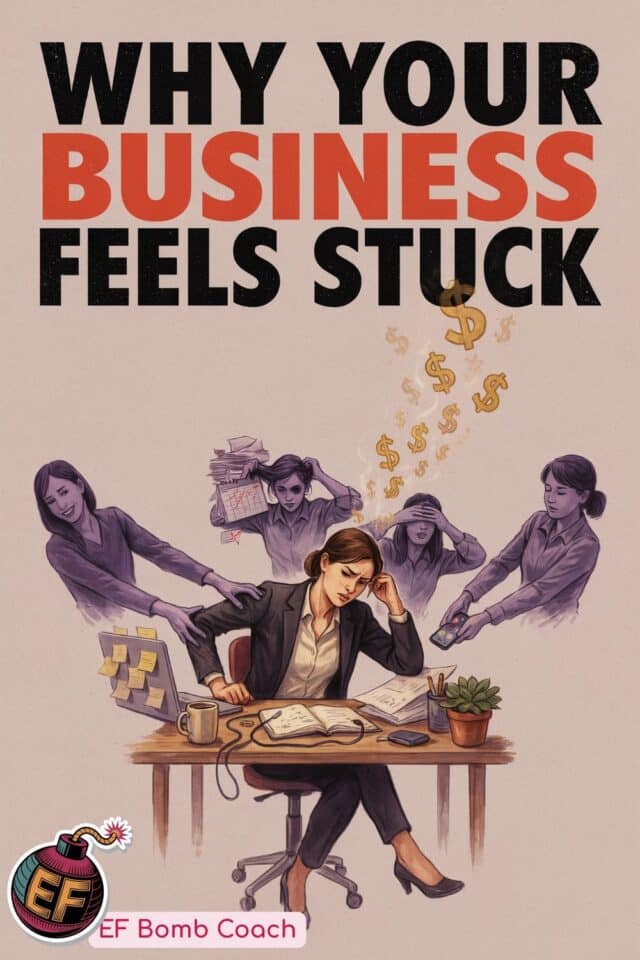
Use the 90-second rule before you hit send
Here's the simplest tool in this whole conversation, and it's harder than it sounds: wait 90 seconds.
Stress hormones peak and begin to clear in about 90 seconds. That doesn't mean everything is fixed after a minute and a half. It means the first wave can pass if you don't feed it with instant action.
When your nervous system is lit up, waiting feels awful. The urge gets loud. You want to send the email now, lower the price now, explain yourself now, say yes now, change the offer now. Your body reads delay as danger.
But most things in your business do not need an immediate response.
The client can wait a day for the proposal. The email doesn't need to go out in the next five minutes. The discount does not have to be offered before anyone even asks. A lot of that urgency is coming from inside you, not from the situation itself.
Try this the next time you feel that spike:
- Notice the urge. Catch the moment you feel pulled to react.
- Name the feeling. “I'm scared they'll say no.” “I'm afraid this won't work.” “I don't want them to be mad.”
- Breathe and wait 90 seconds. No typing. No discounting. No explaining.
- Ask one question: “Is this a business decision or a nervous system decision?”
That question can change everything.
The first answer might still be stress. Fine. The goal isn't perfection. The goal is awareness before action.

Did you know I have a membership for women who want to improve their executive function skills? Check it out here.
Build your business rules on a regulated day
One of the best things you can do for your business is make important decisions when you feel steady, not when you feel triggered.
Set your prices on a regulated day. Write your policies on a regulated day. Define your scope, your boundaries, your deliverables, and your client expectations on a regulated day. Then commit to those decisions.
Why? Because stressed-you will always want to renegotiate with scared logic.
Stressed-you will want to discount to keep the peace. Stressed-you will want to rewrite the offer. Stressed-you will want to overexplain, overdeliver, and overcorrect. If you already made the decision from a calm state, you have something to point back to.
“This is how my business runs.”
That sentence gets a lot easier when you wrote the rule with access to your full brain.
A simple regulated playbook can include a few things:
- a personal rule that you never send money-related responses in the moment
- a stress list of tasks you avoid, plus the reason each one feels loaded
- the name of your default response, so you can catch it faster
- written pricing, offers, and policies you can return to when panic tries to rewrite them
Your stressed brain is trying to protect you. Your regulated brain is trying to grow something sustainable. You need both, but only one of them should be making business policy.
If you want more support with the executive function side of this, the Executive Function and Neurodivergence course goes deeper into how your brain handles planning and follow-through. If community support helps you stay grounded, you can also find that inside the Executive Function Support for Women Facebook group and the EF Bomb Membership.
The next 90 seconds matter more than you think
Most stress-driven business decisions don't happen because you're incapable. They happen because your brain knows how to protect you fast. Once you can tell the difference between protection and strategy, you stop paying for that panic with money, time, and resentment.
You don't need to stop having fight, flight, freeze, or fawn responses. You need to catch them before they price the offer, answer the email, or say yes for you.
Before your next decision, give yourself 90 seconds and ask, “Is this strategy or stress?” That's often the moment you get your seat back.