How to Make Business Decisions When Your Brain Is Fried
You know the moment. You're staring at your screen, the clock is ticking, and you need to make a call, but your thoughts feel scrambled. The usual advice is “take a break,” yet business decisions don't always care that your brain feels like it's been run through a blender.
I'm going to talk about a practical way to make solid decisions even when your mental energy is low. You'll sort what's truly urgent, cut options down fast, borrow objectivity when emotions run hot, and set yourself up with simple decision “defaults” for next time.
What “brain fried” actually feels like in a workday
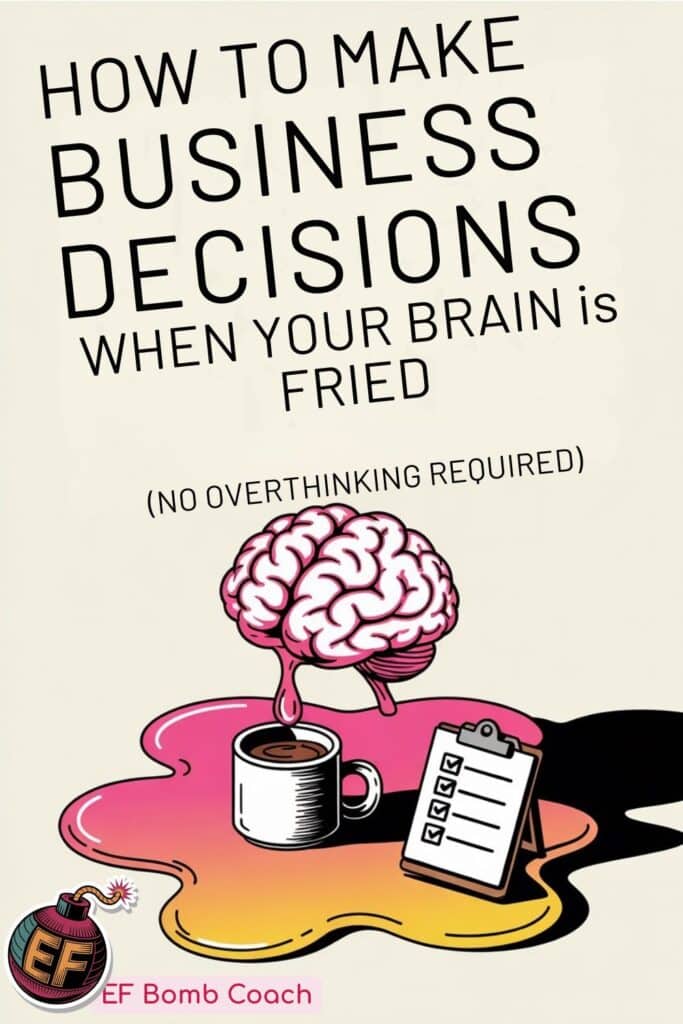
“Brain fried” is what happens when your cognitive resources are depleted. It's not you being dramatic. It's your brain hitting a limit. It's just DONE.
On these days, it's hard to juggle thoughts, compare options, or even understand what you're reading. You might notice things like:
- You can't hold multiple thoughts at once, everything slips away mid-sentence.
- You read the same line four times and still don't know what it says.
- Every option sounds either awful or identical.
- Your body feels tired even though you haven't done physical work.
- Emotions run closer to the surface, so you're more reactive.
- Simple choices (like lunch) suddenly feel impossible.
That last one can be the most telling. When choosing a sandwich feels as heavy as choosing a vendor, you're dealing with cognitive depletion, not a motivation issue.
This tends to be especially common for neurodivergent business owners, because you're often managing executive function challenges on top of the normal pressure of running a company. If you're an ADHD business owner, you may recognize how quickly decision fatigue stacks up after emails, client needs, money choices, and constant context switching.
When your business won't wait for you to feel better
Sometimes you can postpone a business decision. Sometimes you can't.
These are the moments where “come back to it later” turns into a luxury you don't have. For example, you might need to decide today because:
- A client is waiting on your answer to keep a project moving.
- A collaboration partner wants a yes or no by end of day.
- A contract is on the table and negotiation is happening now.
- A problem needs solving before it snowballs.
- A team member needs direction so they can do their job.
- A financial commitment has a deadline attached.
- You're mid-launch and decisions keep coming rapid fire.
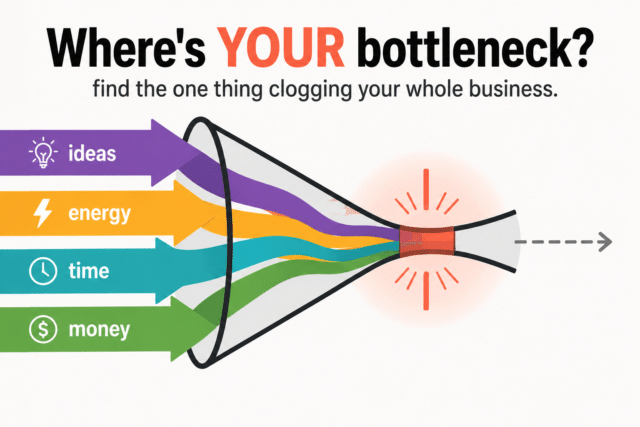
The hard part is that a fried brain can't reliably judge urgency. Everything feels like it's on fire. Everything feels like one wrong move could wreck your business. That's why you need a decision process that works even when your brain doesn't want to cooperate.
What not to do when you're mentally depleted
When you're running on fumes, some strategies that seem helpful make things worse. They drain more energy, add more inputs, and push you toward regret-based decisions.
Here are the traps to avoid:
- Don't white knuckle complex decisions alone. Forcing your way through a messy choice without any support often ends with “Why did I say yes to that?” later.
- Don't decide from guilt or shame. “I should've decided already” is not a decision framework. It's pressure, and pressure makes sloppy calls.
- Don't gather more information just to feel productive. More info often means more options, and more options means more evaluating. That's the exact skill your brain can't do well right now.
- Don't poll ten different people. You won't get clarity, you'll get ten perspectives to manage, plus the emotional weight of trying to please everyone.
- Don't chase the perfect choice. Perfection isn't available even on your best days, so it's definitely not available today.
- Don't compare your decision speed to neurotypical entrepreneurs. That comparison usually turns into a shame spiral, and shame doesn't help you think.

For the love of all that is holy, stop treating “more effort” like it's always the answer. On brain-fried days, effort is expensive.
When your brain is depleted, adding complexity doesn't create clarity, it creates noise.
Start by triaging: Does this really need a decision today?
Before you decide anything, sort decisions by true urgency. This one step can save you hours of stress, because it separates real deadlines from anxiety-driven urgency.
Use this simple triage table to label what's on your plate:
| Category | What it means | Common business examples |
|---|---|---|
| Must decide today | A real deadline with real consequences | Losing an opportunity, breaching a contract, blocking a launch task |
| Should decide soon | It feels urgent, but you have wiggle room | Pushing a timeline 24 to 48 hours, replying after you review details |
| Can wait | Anxiety makes it feel urgent, but there's no true clock | Low-stakes choices, non-urgent emails, “I should handle this” tasks |
The takeaway is blunt: most things that feel like “must decide today” are actually “should decide soon” or “can wait.” A fried brain struggles to rank everything as urgent, so you need something outside your own head.
Get an external perspective (fast, not complicated)
This doesn't require a committee. Ask one grounded person, like a trusted business buddy, “Does this actually need a decision today, or does it just feel that way?”
That quick mirror can cut the panic in half. It also gives you permission to move items into the right category without second-guessing yourself.

Use the two-option coin flip to hear what you really want
This method sounds too simple, which is why people skip it. Still, it works because it bypasses the part of your brain that's stuck.
Here's the rule: get your decision down to two options, not three, not four.
If there are too many, cross options off until only two remain. Don't overthink which ones you cross off. You're not building a thesis, you're creating a clear fork in the road.
Then:
- Assign heads to option A and tails to option B.
- Flip a coin.
- Notice your reaction to the result.
Relief is data. Disappointment is data. Your emotional response tells you what your gut already prefers, even when you can't explain it. The coin isn't the decision-maker. It's a shortcut to your truth.
If you land on heads and feel your shoulders drop, that's your answer. If you land on tails and instantly want a redo, that's also your answer.
Borrow objectivity: pretend you're advising a friend
When you're in the middle of a decision, you're carrying extra weight: fear, pressure, what-ifs, and old stories about what it means to “mess up.” That emotional load makes it hard to see straight.
So borrow distance.
Picture a friend coming to you with the exact situation. Same options, same deadline, same stakes. What would you tell them to do?
You'd probably be more calm. You'd focus on what matters. You'd spot what they're overthinking. You'd also talk to them like a human being, not a machine that should perform perfectly every day.
That's the point. This exercise softens the emotional volume so your thinking can come back online, even a little.
Build business decision menus when you feel good, so you don't have to think later
The most powerful help for brain-fried decision days happens before the next brain-fried day. You create decision menus while your brain is working well, then follow them when it's not.
A decision menu is a short, written set of defaults for situations you face repeatedly. It's not a rigid script. It's a “when this happens, I do this” guide that protects your energy.
A few examples you can document:
- When a client asks for rush work, you charge a set extra percentage and check capacity using your usual method.
- When pricing feels unclear, you default to your rate sheet and set a firm limit on discounting.
- When a collaboration offer comes in, your yes or no criteria are written down (values match, capacity is real, audience fit is strong).
- When you're overwhelmed by choices, you pick the option that preserves your energy.
Once it's documented, you stop reinventing the wheel on hard days. Instead, you open the doc and follow the protocol.
Buy yourself time (even when it feels like you can't)
A lot of “must decide today” situations soften the moment you ask for breathing room. People often respect thoughtfulness, especially when you sound clear and professional.
Try a line like:
- “Let me check my calendar and get back to you.”
- “I want to give this the consideration it deserves. Can I respond by tomorrow afternoon?”
- “I need to verify something before I can commit.”
- “My policy is to sleep on major decisions.”
Even 24 hours can change everything. Sleep helps. Space helps. A short pause lets your nervous system settle.
This isn't about avoiding decisions. It's about making them with more of your brain available.
Reality-check the stakes so you can choose without spiraling
When your brain is fried, everything feels high stakes. That's why you freeze, because what if you choose wrong?
Instead of arguing with that fear, reality-check it. Ask yourself:
- What's the realistic worst-case scenario? Not the disaster movie version, the real one.
- How likely is that worst case?
- If it happened, could you recover?
- What's the worst-case scenario if you don't decide at all?
That last question changes things. Sometimes “not deciding” creates the bigger problem, like missing a deadline, losing momentum, or keeping your team stuck.
Most business decisions aren't life or death. Many are reversible. Even when they're not ideal, they often produce outcomes you can work with.
An imperfect decision today can be safer than no decision for a week.

Did you know I have a membership for women who want to improve their executive function skills? Check it out here.
Plan recovery time after you decide (because decision-making costs more right now)
Making decisions while your brain is fried is exhausting. It burns more fuel than normal, because you're forcing focus, emotion regulation, and problem-solving at the same time. So treat the decision like a sprint. After the sprint, recover.
Clear your calendar if you can. Do something mindless for a while. Fold laundry. Take a walk. Watch a simple show. Choose rest or movement based on what helps you reset fastest. Also, avoid making new decisions for a few hours, if possible. Decision pileups are how you end up snapping at someone, panic-scrolling, or agreeing to something you don't want.
A safe dopamine hit can help too (whatever “safe and healthy” means for you). The point is to let your system come down from the stress of pushing through low capacity.
Give yourself permission to be “off” for the rest of the day. You just did something hard with limited resources. That earns recovery, not more pressure.
When your brain is fried, the goal isn't perfect logic. The goal is a decision process that stays steady even when your capacity dips. Triage urgency, cut your options down, borrow distance with the “friend advice” trick, and use written decision menus so you don't have to invent answers on the spot. Then protect your recovery time, because cognitive capacity is a limited resource. Next time a deadline hits on a low-brain day, you'll have a plan, not just pressure.