Why Your Packed Schedule Is Destroying Your Productivity
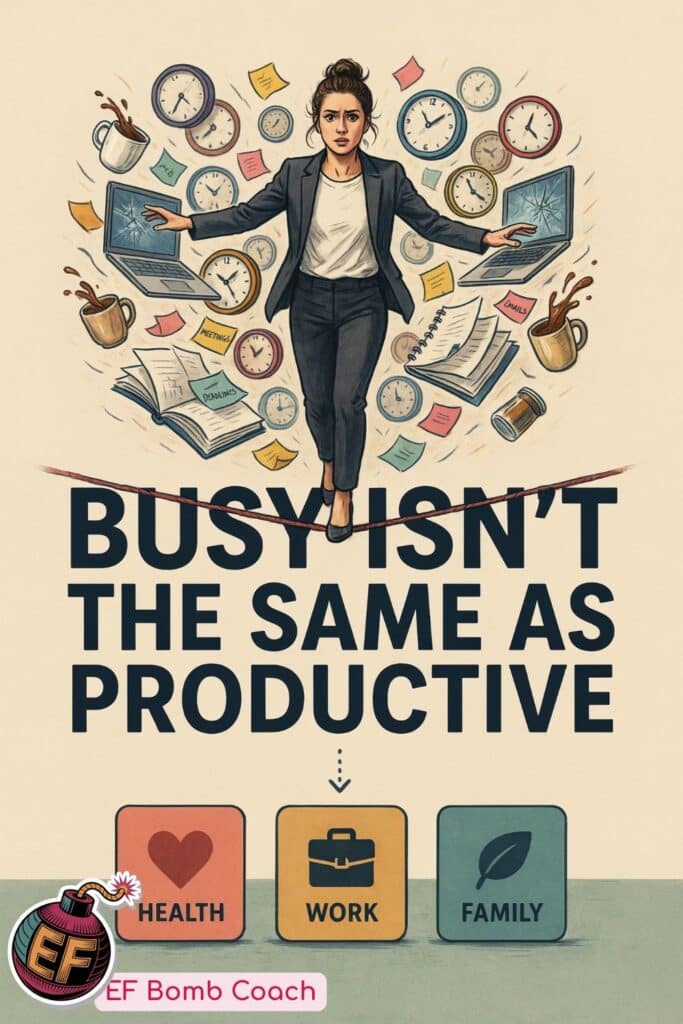
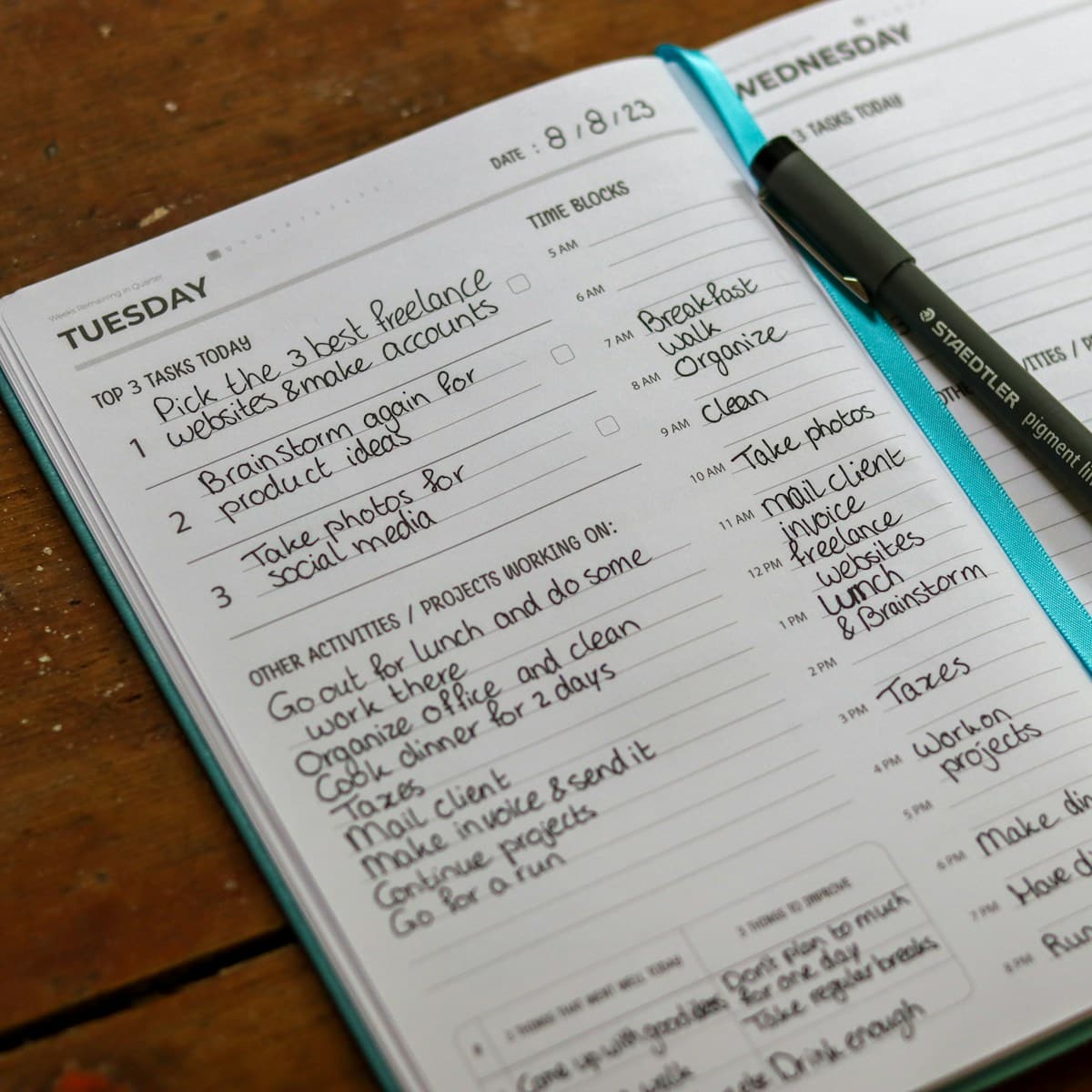
A calendar packed from 8:00 a.m. to 6:00 p.m. can look like proof that you're on top of things. Then 3:00 p.m. hits, your brain is fried, half the list is untouched, and the whole day feels like it broke in the middle.
If that sounds familiar, you don't have a motivation problem. You have a schedule design problem. A day can look productive on paper and still drain your attention so fast that the work never has a real chance.
Why a packed schedule feels so responsible
An overpacked schedule usually doesn't feel reckless. It feels good. Responsible. Serious. Ambitious.
You look at a full calendar and it seems like evidence that you care about your business. It can feel like proof that you're trying hard, staying focused, and making the most of your time. Empty space, on the other hand, can feel suspicious. If there's a gap, your brain may read it as wasted time.
If you're neurodivergent, there can be even more loaded into that feeling. A packed day can become a way to prove something. Maybe you're trying to prove to yourself that you're not lazy. Maybe you're trying to outrun old labels. Maybe you're trying to make sure nobody can say you don't follow through.

A crowded calendar often carries all of this at once:
- It feels like proof that you care.
- It feels like proof that you're reliable.
- It feels like proof that you're ambitious.
- It feels safer than leaving room you might “waste.”
That's why wiggle room can feel uncomfortable. It can feel sloppy. It can feel like you're not doing enough.
But that instinct works against you. When you fill every open block, you don't build a stronger day. You build a day with no shock absorbers. Nothing can run long. Nothing can go sideways. Nothing can take normal human effort without knocking the rest of the schedule off balance.
And since real work almost never fits neatly inside the time box you imagined for it, the whole thing starts cracking early.
What an overpacked day does to your brain
The morning looks organized, the afternoon is a pileup
Here's how this usually goes.
You start task one. It runs long, because tasks do that. Maybe there was a detail you forgot. Maybe it took longer to get your brain moving than you expected. Maybe the work was harder than it looked on last night's to-do list.
Now task two starts late.
That sounds small, but it changes the rest of the day. A piece of your attention is no longer on the work in front of you. It's now tied up in low-grade anxiety about being behind. Your brain is trying to do two jobs at once, finish the task and keep score.
Then task two runs over as well, because you had no warm-up time and no reset time. By the afternoon, you're not ten minutes behind. You're an hour behind, maybe more.
That's when the calendar changes shape. In the morning it looked organized. By 2:30 or 3:00, it looks like a list of things you're failing to do.
From there, you usually get pushed into one of two bad options. You rush through the rest of the day and do thin, low-quality versions of work that deserved better. Or you move things to tomorrow. The problem is tomorrow was already full, so tomorrow starts compromised before it even begins.
That cost never shows up on the calendar itself. It shows up in your output, your stress level, and the way unfinished work keeps rolling forward.
Transition debt builds whether you notice it or not
Every time you stop one task and start another, your brain has work to do.
It has to close out the mental file from the thing you were doing. It has to keep any loose ends in working memory. Then it has to open the next file, remember what matters, and get back up to speed.
That process has a cost.
When you have buffer time between tasks, your brain gets a chance to pay that cost. You wrap up the first thing. You move around a little. You let your thoughts settle. You arrive at the next task with more of your attention available.
When you don't have buffer time, the cost doesn't disappear. It carries forward. By the fourth or fifth switch of the day, you're carrying the leftovers from every rushed transition that came before it.
So if your brain feels slow, scattered, or weirdly resistant by midafternoon, that doesn't mean you're broken. It may mean you're overloaded with unpaid switching costs.
If you're neurodivergent, the cost is higher
This hits every brain, but neurodivergent brains usually pay more for it.
If you have ADHD, task switching is often more expensive to begin with. The same working memory system that helps you hold context and shift cleanly between tasks is also the system that can be less consistent. So the transition itself asks more of you.
There is also the emotional piece. Cognitive load and emotional regulation are tied together. When your working memory is overloaded, your ability to regulate yourself tends to drop with it.
That means an overpacked day doesn't only make you less productive. It can make you more irritable. More reactive. More likely to send the email too fast, answer the client too sharply, or make a sloppy decision because your brain is cooked and your nervous system is done.
If you run a business, that's not a small side effect. Your judgment matters. Your relationships matter. The way you respond under pressure is part of the work.
So when your schedule keeps pushing your brain into that worn-down state, the cost is bigger than “I didn't finish my list.” It spills into the quality of your business.

More scheduled hours don't mean more useful work
A packed day creates the feeling of productivity. That's part of why it's so convincing.
The blocks are there. The to-do list is long. You're busy all day. You're moving the whole time. On the surface, it looks like hard work.
But busy and productive are not the same thing.
If your work depends on thinking, writing, deciding, solving problems, managing clients, or creating anything worth sharing, then attention quality matters more than hours logged. Four focused hours on the right work can beat eight frantic hours of chopped-up attention almost every time.
You probably already know this from experience. The work you're proudest of usually doesn't come from your most chaotic days. It comes from the days when your brain had enough room to think clearly.
That's the part productivity culture gets wrong. It trains you to trust visible effort over useful output. A crammed calendar looks impressive. It just doesn't reliably produce better work.
When every hour is spoken for, your day fills with partial attention, rushed decisions, and diminishing returns. The later the day gets, the more expensive each additional task becomes.
So the question isn't, “How much can you fit in?”
The better question is, “What kind of schedule lets you do your best work without wrecking yourself halfway through it?”
White space is recovery, not wasted time
Most people look at empty blocks on a calendar and see inefficiency. Your brain may do this automatically. It sees open space and starts trying to fill it.
That reaction makes sense, but it's wrong.
White space is not laziness. It is not dead air. It is not a sign that you're underworking. It's the part of the schedule that keeps the rest of the schedule from falling apart.
Your brain is not a machine that gives the same output every hour no matter what you ask of it. It's a biological system. It needs time to reset, close loops, recover from effort, and prepare for what's next.
A day with no buffer is like a house with no hallways. Every room crashes into the next one.
White space is not empty time. It's recovery time your brain uses to finish one thing before it has to start another.
Without that recovery, your capacity doesn't stay level across the day. It drops. The first hour may feel sharp. By the fourth, fifth, or sixth task, your attention is thinner, your patience is shorter, and the work gets rougher around the edges.
The four kinds of white space your schedule needs
Not all white space does the same job. This quick breakdown makes it easier to see what belongs where.
| Type of white space | How long | When you need it | What it does |
|---|---|---|---|
| Micro white space | 5 to 10 minutes | Between regular tasks | Helps your brain close one loop and arrive at the next task with less carryover |
| Transition white space | 15 to 20 minutes | When shifting between different kinds of work | Gives your brain more time to change gears, like moving from deep work to a client call |
| Recovery white space | 30 to 60 minutes | After high-demand work | Lets your brain settle after a launch, presentation, hard conversation, or heavy decision-making block |
| Strategic white space | Half a day each week | For open thinking time | Creates room for planning, problem-solving, and the kind of background processing that never happens in a packed day |
These aren't interchangeable. A five-minute break after inbox cleanup is helpful, but it won't do the same job as thirty minutes after a stressful meeting or a half-day with nothing scheduled.
That last type matters more than people think. Strategic white space is where higher-level thinking has room to show up. Not catch-up time. Not admin. Not “I'll leave it open in case something comes in.” Real open space.

Did you know I have a membership for women who want to improve their executive function skills? Check it out here.
How to tell if your schedule is the real problem
Sometimes the clearest sign is how your day feels. Other times it's the pattern your calendar keeps repeating.
If your schedule is costing you more than it's giving you, you'll usually notice a few things:
- You're often late to things on your own calendar because the task before them ran over.
- The quality of your work changes a lot, and it drops hardest when the day gets crowded.
- You end the day exhausted but still feel like nothing meaningful moved.
- The same tasks keep getting pushed to next week because they never fit inside an already overfull day.
- Your decisions get sloppier as the afternoon goes on.
- You feel behind before the next task even starts.
None of those automatically mean you need more discipline. They can point to schedule overload.
That matters, because when you misread overload as laziness, you respond the wrong way. You tighten the schedule more. You add more structure, more rules, more items, more pressure. Then the collisions get worse and you end up using even more energy to drag yourself through a day that was never built to hold what you put into it.
How to build a schedule your brain can keep up with
Put the space on the calendar first
If you wait until after you've added all the tasks to make room for recovery, there usually won't be any room left.
That's why white space has to go in first. It has to be part of the design.
Start with the smallest shift. Put a buffer between every task, even if it's only five minutes. Then look for the places where your day asks more of you and add longer recovery around those. If you know a call drains you, don't put another demanding task right after it. If you know deep work takes time to enter and time to leave, stop pretending you can bounce straight out of it and perform instantly in a different mode.
Then block a half-day each week that stays open.
Protect that block the same way you'd protect a client appointment. The fact that it looks empty does not make it available. It already has a job.
Try the five-day experiment
This will probably feel uncomfortable at first.
If you're used to measuring effort by how crowded the calendar looks, a lighter schedule can feel like you're doing something wrong. That feeling doesn't mean the change is bad. It means you're used to equating pressure with productivity.
So keep it simple. For five days, add a five to ten-minute buffer between every task on your calendar. That's it.
Then pay attention.
Does the late-day pileup happen less often? Do you feel less behind by noon? Does your afternoon brain stay steadier? Are you making fewer rushed decisions? Do you end the day with better work, even if there are fewer boxes checked?
Five days gives you a small batch of real data from your own life. Two weeks makes the pattern easier to see.
Give your calendar room to breathe
A less packed schedule doesn't mean you're less serious about your business. It means you're planning for a real brain, not an imaginary robot version of yourself.
Recovery time, transition time, and white space are not rewards you earn after the work is done. They are operating costs. When you treat them that way, your schedule gets more honest, and your output gets better.
Five minutes between tasks sounds tiny on paper. In a real workday, it can be the difference between a day that keeps working and a day that collapses under its own weight.